Life as Practice: Complexity, Entanglement, and Public Policy
Tue, Feb 10, 2026 07:00 AM - 15:00 PM
Kirinari Street, Canberra, Australian Capital Territory, Australia, 2617
Life as Practice: Complexity, Entanglement, and Public Policy
Tue, Feb 10, 2026 07:00 AM - 15:00 PM
Overview
About this Event
We warmly invite you to a workshop organised by the University of Canberra’s Centre for Deliberative Democracy.
The workshop seeks to preview and discuss the forthcoming book Life as Practice: Complexity, Entanglement, and Public Policy (ADD the Press) by Hendrik Wagenaar, Adjunct Professor at the Centre for Deliberative Democracy, University of Canberra, and Fellow at the Centre for the Study of Contemporary Solidarity (CeSCoS), University of Vienna, Austria. We are delighted that Severine van Bommel, Senior Lecturer at the University of Queensland's School of Agriculture and Food Sustainability, with a life-long interest in social practices, has agreed to be the discussant.
This workshop reframes policymaking as a set of lived practices and explores how complexity, material entanglement, and ethics shape the way policies are designed, implemented, and experienced.
The workshop will be of particular interest to students and scholars of public policy, as well as policymakers, and practitioners seeking new ways of understanding and engaging with the messy realities of governance.
Location & Programme
Centre for Deliberative Democracy, Building 11, Room 11B50, University Drive South, University of Canberra, ACT 2617, Australia
Time: 10:00 – 14:00
About the Workshop
At the heart of this project is the idea that people engage with the world less through detached knowledge than through action in context. In acting, the world responds—prompting adaptation, learning, and often unintended consequences.
The book and workshop draw on practice theory and extend it in three ways:
· Complexity: Humans act within nested, evolving systems that defy prediction, shaping both risks and opportunities for policy.
· Entanglement: Practices are inseparable from the material world—natural and technological—which has agency of its own.
· Ethics: To act responsibly in such a world requires an ethics of entanglement attuned to human and non-human interdependence.
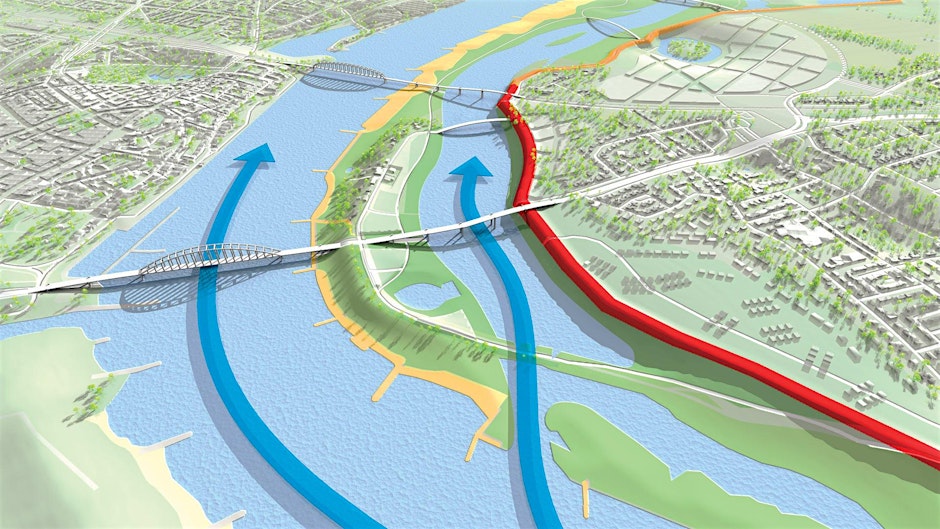
Through case studies—including the Netherlands’ Room for the River project—the author illustrates what a practice-driven governance might look like in theory and in action.
Who should attend?
· Scholars and students interested in practice theory, governance, and policy analysis
· Policymakers and public servants seeking innovative frameworks for navigating complexity
· Practitioners working at the interface of community, environment, and administration
Join us for lively conversations across disciplinary and professional boundaries as we rethink what it means to make and enact public policy in times of uncertainty.
User Photo Gallery
How to get there?


Discover our top experiences